

Former Minis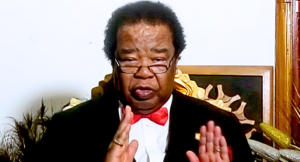 ter of External Affairs, Professor Bolaji Akinyemi, has voiced strong concern over what he described as an “unwarranted and unfair” attempt to associate Nigeria with allegations of genocide.
Akinyemi warned that such a grave accusation could have far-reaching implications for Nigeria’s global image and diplomatic relations.
READ ALSO: False narrative: Fani-Kayode rejects US lawmakers claim
His reaction follows the U.S. State Department’s recent designation of Nigeria as a “Country of Particular Concern” (CPC) over alleged violations of religious freedom, alongside a proposal to impose sanctions on certain Nigerian officials accused of complicity in attacks against Christians.
Speaking on Politics Today, a programme aired by Channels Television on Friday, Akinyemi said it was distressing to see Nigeria mentioned in the same breath as Israel in relation to genocide accusations.
“As a Nigerian, I am depressed and upset that the charge of genocide will be levelled at my country,” he lamented.
“When you compare what is happening in Nigeria with what Netanyahu has done in the Middle East, to now link Nigeria and put us in the same basket as Israel and accuse us of genocide, I think it is unjustified.”
While acknowledging that violent incidents in Nigeria’s Middle Belt region remain deeply troubling, Akinyemi maintained that such situations cannot be equated with genocide.
“It is true that there are unsavoury developments in the Middle Belt that worry us, but it doesn’t amount to genocide,” he said.
The former minister also cautioned citizens against making sweeping or exaggerated statements that could damage the country’s reputation internationally.
“We Nigerians must understand that there are consequences to our actions. When we run down our own country unjustifiably, we demarket our image and every Nigerian gets affected by what is said or unsaid,” he warned.
Akinyemi further faulted what he called the government’s slow and inadequate response to the U.S. allegations, urging authorities to handle the matter with urgency and seriousness.
“I don’t know why we waited for the matter to get this far into the U.S. Congress before it became an issue of public concern in Nigeria. Before you know it, they will cancel passports, cancel visas, and when you want to run for Security Council positions, this matter will arise, and genocide will now be attached to the name and status of our country,” he said.
He advised that the issue should not be left to the National Assembly alone but must be addressed at the highest diplomatic level by the Ministry of Foreign Affairs and the Office of the National Security Adviser.
“The Nigerian government must take this issue seriously. This is not an issue for just the Senate versus the Senate. At the highest level, the Ministry of Foreign Affairs and the National Security Adviser, the matter should be taken up directly with the United States,” he emphasised.
Akinyemi also urged the National Security Adviser to engage his American counterpart to clarify Nigeria’s stance and forestall any diplomatic backlash.
“Now that the NSA is saddled with internal and domestic security affairs, maybe he should take it up at that level with his colleague in the United States and explain matters clearly,” he advised.


