

Aliko Dangote’s Historic Milestone: A Beacon of Hope for Nigeria’s Energy Sector – Overtnews Editorial
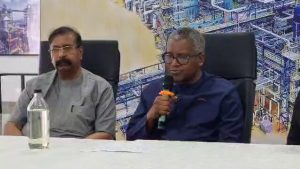 In a momentous development for Nigeria and indeed Africa, Aliko Dangote, the continent’s most illustrious industrialist and the richest black man on earth, announced the commencement of fuel production in commercial quantities at the Dangote Refinery.
This announcement, made on Tuesday, has sent waves of relief and optimism across the country, especially among motorists and the broader populace, who have endured the harsh realities of fuel scarcity and exorbitant prices for far too long. With the first batches of petroleum products set to hit the stations from Thursday, September 5, 2024, Nigeria stands on the cusp of a new era in energy production, economic stability, and self-sufficiency.
For nearly three decades, Nigeria, despite being one of the world’s largest oil producers, has struggled with a paradoxical situation where its refineries remained inoperative, forcing the country to rely heavily on imported refined petroleum products. This reliance has been a heavy burden on the nation’s economy, leading to recurring fuel crises, with motorists enduring long queues at filling stations, and the government grappling with the unsustainable subsidy regime.
The situation reached a tipping point last year when President Bola Ahmed Tinubu announced the removal of fuel subsidies—a bold but contentious decision. The move, while economically justifiable, resulted in an astronomical rise in the price of Premium Motor Spirit (PMS), with fuel prices soaring to as high as ₦1,200 per liter in some parts of the country. This policy shift, coupled with the perennial inefficiencies in the fuel importation and distribution network, exacerbated the suffering of ordinary Nigerians, deepening the economic woes of a population already grappling with inflation and a declining standard of living.
Read also: Nigerian Students Threaten Nationwide Strike Over Fuel Price Hike
It is against this backdrop that the significance of Dangote’s announcement cannot be overstated. The Dangote Refinery, a $19 billion investment, is poised to revolutionize Nigeria’s energy landscape. With a production capacity of 650,000 barrels per day, it is not only Africa’s largest refinery but also one of the largest in the world. This monumental achievement marks the beginning of Nigeria’s journey towards self-reliance in petroleum products and a potential end to the decades-long cycle of fuel shortages and price hikes.
The commencement of fuel production at the Dangote Refinery represents a pivotal moment for Nigeria’s energy sector. For the first time in decades, the country can look forward to producing its own fuel for both local consumption and export. This development is expected to bring much-needed relief to motorists, who have borne the brunt of the fuel crisis, with long queues at filling stations and exorbitant prices. More importantly, it will alleviate the burden on the Nigerian National Petroleum Company Limited (NNPCL), which has been the sole importer of petrol since the collapse of the nation’s refineries.
Aliko Dangote’s vision and commitment to transforming Nigeria’s energy sector deserve commendation. His foresight in investing in such a critical infrastructure project, despite the challenges and risks involved, is a testament to his belief in the potential of Nigeria and Africa. The refinery’s operations will not only stabilize the domestic fuel market but also position Nigeria as a key player in the global oil market, with the potential to export refined products to other countries, thereby generating foreign exchange and boosting the economy.
Beyond the immediate impact on fuel availability and prices, the Dangote Refinery is set to have far-reaching effects on Nigeria’s economy. The refinery is expected to create thousands of jobs, both directly and indirectly, and stimulate the growth of related industries, such as petrochemicals, logistics, and services. This will contribute significantly to reducing unemployment and poverty levels in the country. Additionally, the refinery’s operations will help conserve the country’s foreign reserves by reducing the need for fuel imports, thereby strengthening the naira and improving the overall economic outlook.
Moreover, the availability of locally refined fuel is likely to have a stabilizing effect on the economy by curbing inflation. The high cost of fuel has been a major driver of inflation in Nigeria, affecting the prices of goods and services across all sectors. With the commencement of local production, it is expected that fuel prices will begin to normalize, easing the financial burden on consumers and businesses alike. This will, in turn, improve the standard of living for ordinary Nigerians and enhance the country’s economic resilience.
The significance of Dangote’s achievement extends beyond Nigeria’s borders. It is a powerful symbol of what is possible when African entrepreneurs and industrialists take bold steps to address the continent’s challenges. The Dangote Refinery stands as a beacon of hope and inspiration for other African nations grappling with similar issues. It demonstrates that Africa has the capacity and resources to solve its own problems and drive its own development, without relying on external assistance.
In conclusion, Aliko Dangote’s announcement of the commencement of fuel production at his refinery marks a new dawn for Nigeria. It is a development that holds immense promise for the country’s energy sector, economy, and people. While challenges remain, the refinery’s operations represent a significant step towards self-sufficiency and economic stability. Nigerians can now look forward to a future where fuel shortages and exorbitant prices are a thing of the past, and where the country’s vast oil resources are harnessed for the benefit of all.
As the first barrels of fuel roll out of the Dangote Refinery, it is fitting to commend Aliko Dangote for his vision, determination, and unwavering commitment to Nigeria’s development. His contribution to the nation’s energy security and economic prosperity will be remembered as a defining moment in Nigeria’s history. The Dangote Refinery is not just an industrial facility; it is a symbol of hope, resilience, and the limitless potential of Africa. It is a legacy that will endure for generations to come.


