

Hunger: Nigerian Army Deploys Troops to Protect Northern Farmers and Secure Planting Season
Afor Kenneth
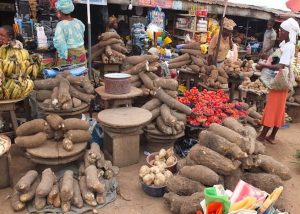 As the rainy season begins, the Nigerian Army has deployed troops to several northern states to safeguard farmers and ensure a smooth planting season.
According to Major General Edward Buba, Director of Defence Media Operations, the deployment focuses on the North West and North Central regions.
This strategic move has already enabled numerous farmers to access their fields, paving the way for a successful harvest. The initiative comes as Nigeria grapples with food shortages, which have contributed to soaring food inflation, currently at over 40% according to the National Bureau of Statistics (NBS).
Recently, the country’s inflation rate reached a record high of 34.19% in June 2024, before slightly decreasing to 33.40% in July, as per the NBS’ Consumer Price Index data.
According to the statistics bureau, “The food inflation rate in June 2024 was 40.87 per cent on a year-on-year basis, which was 15.62 per cent points higher compared to the rate recorded in June 2023 (25.25 per cent).
“The rise in food inflation on a year-on-year basis was caused by increases in prices of the following items: millet whole grain, garri, guinea corn, etc (bread and cereals class), yam, water yam, cocoyam (potatoes, yam and other tubers class), groundnut oil, palm oil, etc (oil and fats class) and catfish dried, dried, etc.
“On a month-on-month basis, the food inflation rate in June 2024 was 2.55 per cent which shows a 0.26 per cent increase compared to the rate recorded in May 2024 (2.28 per cent)”
The National Bureau of Statistics (NBS) reported that the average annual food inflation rate for the 12 months ending June 2024 was 35.35%, representing an 11.31% point increase from the previous year’s average annual rate. The core inflation rate, which excludes volatile agricultural and energy prices, rose to 27.40% in June 2024, a 7.34% increase from the 20.06% recorded in June 2023.
According to the NBS’ Consumer Price Index and Inflation Report for June 2024, the surge in food inflation is attributed to price hikes in essential items such as:
– Bread and cereals (millet, garri, guinea corn)
– Potatoes, yam, and other tubers (yam, water yam, coco yam)
– Oil and fats (groundnut oil, palm oil)
– Fish (catfish, dried fish-sardines, mudfish)
These price increases have contributed to the overall rise in food inflation, highlighting the need for effective measures to address the country’s food security challenges.
It said, “The average annual rate of food inflation for the 12 months ending June stood at 35.35 per cent, which was an 11.31 per cent point increase from the average annual rate of change in June 2023 which was 24.03 per cent.”
An analysis of the National Bureau of Statistics (NBS) data reveals significant variations in food inflation rates across Nigerian states.
On a year-on-year basis, Edo, Kogi, and Cross River experienced the highest food inflation rates at 47.34%, 46.37%, and 45.28%, respectively.
In contrast, Nasarawa, Bauchi, and Adamawa recorded the slowest increases at 34.31%, 34.78%, and 35.96%, respectively.
On a month-on-month basis, Yobe, Adamawa, and Taraba saw the highest food inflation rates in June 2024, at 4.75%, 4.74%, and 4.12%, respectively. Meanwhile, Nasarawa, Kano, and Lagos experienced the slowest increases at 0.14%, 0.96%, and 1.25%, respectively.
Experts attribute these disparities to various challenges affecting food production in Nigeria, including insecurity, inadequate equipment, and other issues. These factors contribute to regional differences in food availability and prices, exacerbating the country’s food security concerns.
In response to the soaring prices of essential commodities, the Federal Government has introduced a series of measures to mitigate the issue.
Recently, it announced a temporary suspension of duties, tariffs, and taxes on the importation of key food items, including maize, husked brown rice, wheat, and cowpeas, through the country’s land and sea borders, for a period of 150 days.
Additionally, the government approved the procurement of 2,000 tractors and 1,200 trailers to enhance agricultural productivity and logistics.
Furthermore, a special committee has been established to develop effective solutions to address the ongoing food crisis in the country. These initiatives aim to alleviate the burden of rising food prices and ensure food security for Nigerians.


