

NGX Records Decline in Trading Activity, Predicts Volatility Amid Market Shifts
By Fasuyi Tolulope Samuel
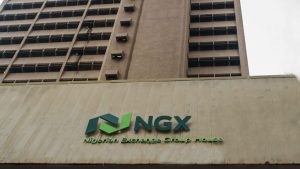 The Nigerian Stock Exchange (NGX) witnessed a significant drop in trading activity at the close of yesterday’s (Wednesday) session, reflecting a broad-based decline across key performance indicators. A total of 315,302,176 shares were exchanged in 8,365 transactions, corresponding to a market value of NGN 5,480,029,481.09.
This marks a stark contrast to the previous trading session on Tuesday, August 13, where there was a 47% decrease in trading volume, a 61% drop in turnover, and a 26% reduction in the number of deals executed.
The market capitalization of the NGX stands at NGN 55.2 trillion, indicating a cautious sentiment among investors as market dynamics continue to shift. A total of 118 equities participated in the day’s trading, with a mixed performance observed across the board. The session closed with 23 gainers and 29 losers, suggesting a delicate balance between bullish and bearish market forces.
Leading the gainers, Guinea Insurance saw a remarkable 10% appreciation in its share price, closing at NGN 0.44 per share. This was closely followed by Skye Shelter Fund, Honeywell Flour Mill, and RT Briscoe, all of which posted gains nearing 10%.
On the other hand, Oando emerged as the day’s most significant loser, with a sharp 9.95% decline to NGN 36.20 per share. Cutix, Academy Press, and Japaul Gold and Ventures also saw substantial losses, shedding 9.92%, 8.7%, and 7.89%, respectively.
Read also: Kylian Mbappe Helps Real Madrid Clinch UEFA Super Cup On Debut
In terms of trading volume, Veritas Kapital Assurance led the pack with 38.4 million shares traded, followed by Guaranty Trust Holding (36.3 million), Universal Insurance Company (23.2 million), and Oando (22.1 million). The performance of these stocks highlights the continued interest in key sectors, despite the overall decline in market activity.
The NGX All-Share Index (ASI) closed the day at 97,199.60 points, a decrease of 190.41 points, or 0.2%. This dip contributes to a 4-week loss of 2.83%, although the index still reflects a marginal 1-week gain of 0.1%. Year-to-date, the ASI remains robust with a gain of 29.99%, underscoring the resilience of the Nigerian stock market in the face of ongoing economic challenges.
Forecast and Prediction Analysis
Looking ahead, market analysts anticipate increased volatility as investors react to evolving economic indicators and corporate earnings reports. The sharp declines in volume and turnover suggest a cautious approach among market participants, likely driven by uncertainties in the global and domestic economic landscape. However, the overall year-to-date gain in the ASI indicates underlying strength in the market, particularly in sectors poised for growth.
As investors reassess their portfolios, we could see a reallocation of assets towards more defensive stocks, particularly in the financial and consumer goods sectors, which have shown relative stability. Additionally, the current price movements in certain high-volume stocks may present opportunities for short-term trading gains, especially for those with a higher risk appetite.
In conclusion, while the market’s recent performance suggests a period of consolidation, the long-term outlook remains positive, with potential for recovery as investor confidence builds. Market participants are advised to stay informed and vigilant as they navigate the complexities of the current trading environment.


