

Afor Kenneth
The Nigerian National Petroleum Company Limited (NNPC Ltd) has declared a state of emergency to increase oil production and reserves in Nigeria.
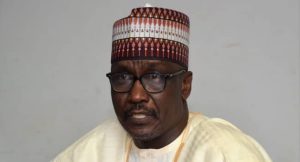
Mele Kyari, CEO of NNPC Ltd, made this announcement at the NOG Energy Week conference in Abuja, emphasizing the need for urgent action to address production challenges.
The company aims to collaborate with stakeholders to reduce production costs and boost output, with plans to replace old pipelines and introduce a rig-sharing program.
“We have decided to stop the debate. We have declared war on the challenges affecting our crude oil production. War means war. We have the right tools.
“We know what to fight. We know what we have to do at the level of assets. We have engaged our partners. And we will work together to improve the situation,” he declared.
The NNPC Ltd Chief, emphasized the need for swift action to boost oil production. Analysis shows Nigeria can produce 2 million barrels daily without new rigs, but delays hinder progress. To address this, NNPC is launching a “war” on obstacles like slow procurement processes.
Long-term plans include replacing old pipelines and introducing a rig-sharing program to keep rigs in-country for 4-5 years. Kyari urged industry collaboration to reduce costs and boost production.
NNPC is investing in midstream gas infrastructure, including the OB3 and Ajaokuta-Kaduna-Kano pipelines, to enhance domestic gas production and supply for power generation, industrial growth, and economic prosperity.
Mele Kyari, CEO of NNPC Ltd, highlighted the company’s support for the Presidential Compressed Natural Gas (CNG) initiative.
In partnership with NIPCO Gas, NNPC Ltd has established multiple CNG stations, with 12 set for commissioning in Lagos and Abuja on Thursday.
The event featured remarks from prominent figures, including OPEC Secretary General Haitham Al Ghais, GECF Secretary General Mohamed Hamel, and Nigerian government officials such as Heineken Lokpobiri, Ekperikpe Ekpo, and Olu Verheijen.
Additionally, Abdulrazaq Isa, Chairman of the Independent Petroleum Producers Group (IPPG), shared his insights.


