

Paul Kigame Set For Fourth Term As Rwandan President
Afor Kenneth
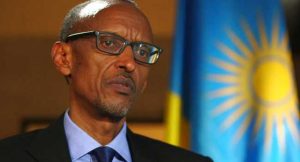 Rwandan President Paul Kagame was inaugurated for a fourth term on Sunday, emphasizing regional peace as a top priority amidst ongoing conflict in the neighboring Democratic Republic of Congo.
Kagame’s landslide victory in last month’s elections, securing 99.18% of the vote, cements his grip on power for another five years.
The ceremony, attended by numerous African heads of state and dignitaries, took place at a packed stadium in Kigali, with many donning Rwanda’s national colors. Kagame’s dominance since the 1994 genocide has been marked by authoritarian rule, with only two candidates allowed to run against him in the recent election and several prominent critics barred.
Human rights activists decry the oppressive regime, while Kigali faces accusations of fueling instability in the DRC’s mineral-rich east by supporting M23 rebels against Kinshasa’s forces.
“Peace in our region is a priority for Rwanda yet it has been lacking, particularly in eastern DRC,” Kagame said in his inauguration address.
Read also: Ondo Lawmaker Calls for Patience with Tinubu Administration Amid Challenges
“But peace cannot be delivered by anyone or from anywhere no matter how powerful if the party most concerned does not do what is needed,” he said in an apparent barb targeting Kinshasa.
Angolan President Joao Lourenco, who attended Kagame’s inauguration, was scheduled to hold private talks with him on a ceasefire agreement for the Democratic Republic of Congo (DRC), brokered by Angola last month.
The deal aimed to end hostilities between the DRC government and M23 rebels, who have made significant gains in the eastern region since 2021. However, the ceasefire was short-lived, as M23 forces captured a town on the Ugandan border on August 4, the day the agreement was set to take effect.
A recent UN report alleged that 3,000-4,000 Rwandan soldiers are fighting alongside M23, with Kigali exerting “de facto control” over the group’s operations. Kagame has sidestepped direct questions about Rwandan involvement, instead highlighting the plight of the Tutsi minority in the DRC and the potential for instability along Rwanda’s border.
President Paul Kagame is widely recognized for his role in rebuilding Rwanda after the devastating 1994 genocide, which saw Hutu extremists perpetrate a brutal 100-day massacre targeting the Tutsi minority, resulting in the loss of approximately 800,000 lives, including both Tutsis and moderate Hutus.
However, his leadership has also been marked by criticism from human rights activists and opponents, who allege that he maintains power through a culture of fear, suppressing dissent through intimidation, arbitrary arrests, killings, and enforced disappearances.
Notably, with nearly two-thirds of the population under the age of 30, Kagame is the only leader that most Rwandans have ever known, having held power since the aftermath of the genocide.
“I proudly cast my vote for president Kagame and made it a priority to be here today to witness this historic inauguration,” said Tania Iriza, a 27-year-old trader, one of the tens of thousands who turned out for the ceremony.
“His leadership has been transformative for our nation. Under his leadership, Rwanda has risen from our tragic past and forged a path towards prosperity, unity and innovation.”
President Kagame has consistently dominated Rwanda’s presidential elections, securing victories with overwhelming majorities, always exceeding 93% of the vote.
In 2015, Paul Kigame spear headed contentious constitutional reforms that reduced presidential terms from seven to five years, but crucially, the changes also reset the term count for Kagame, potentially enabling him to extend his rule until 2034. This move has been widely seen as a strategic maneuver to consolidate his power and prolong his tenure as Rwanda’s leader.


