

By Afor Kenneth
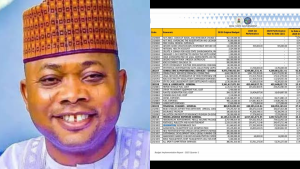
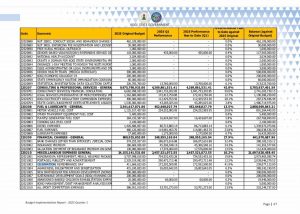
A review of the Kogi State budget performance report for the first quarter of 2025 has revealed that the state government spent N172 million on “celebrations and remembrance events” between January and March.
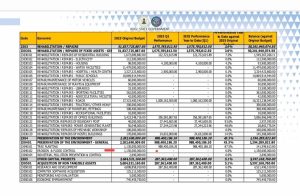
However, during the same timeframe, no expenditure was recorded for erosion and flood control efforts, despite a substantial allocation of N1.15 billion earmarked for that purpose in the 2025 budget.
READ ALSO: Gunmen Storm Senator Natasha’s Family Home in Kogi in Suspected Political Attack
Historically, Kogi State has struggled to adequately fund initiatives aimed at combating erosion and flooding. In 2024, the sector received only N29.8 million, and in 2023, a mere N1.927 million was spent, highlighting a worrying trend of neglect.
This neglect persists even as warnings about the risk of severe flooding grow more urgent. In April 2025, the federal government cautioned that 1,249 communities across 176 local government areas in 30 states and the Federal Capital Territory (FCT) could face significant flooding between April and November.
Professor Joseph Utsev, Nigeria’s Minister of Water Resources and Sanitation, issued the warning at the launch of the 2025 Annual Flood Outlook (AFO), a report by the Nigeria Hydrological Services Agency (NIHSA) in Abuja. The outlook identified high flood-risk areas including Abia, Adamawa, Akwa Ibom, Anambra, Bauchi, Bayelsa, Benue, Borno, Cross River, Delta, Ebonyi, Edo, Gombe, Imo, and Jigawa.
Other vulnerable states listed were Kebbi, Kogi, Kwara, Lagos, Nasarawa, Niger, Ogun, Ondo, Osun, Oyo, Rivers, Sokoto, Taraba, Yobe, Zamfara, and the FCT.
Kogi State, in particular, has experienced devastating effects from past flooding. In October 2024, the state government reported that over 200 communities had been submerged, displacing more than two million residents.
Speaking in Kotonkarfe, Kogi State’s Commissioner for Information and Communications, Hon. Kingsley Fanwo, described the situation as a looming humanitarian crisis. He noted that nine local government areas — Kogi, Lokoja, Adavi, Ofu, Ajaokuta, Idah, Ibaji, Igalamela, and Omalla — were severely impacted.
Despite such disasters, questions remain regarding the proper use of ecological funds across Nigerian states. These funds are intended to address environmental challenges such as erosion and flooding, but reports consistently highlight their mismanagement. Kogi State has frequently been cited among those falling short.
An earlier analysis of Federal Accounts Allocation Committee (FAAC) data showed that between December 2023 and November 2024, Nigerian state and local governments received a total of N96 billion in ecological funds. According to data from the Office of the Accountant General of the Federation, monthly disbursements during that period ranged from N3 billion to N5 billion.
Yet despite receiving these allocations, states like Kogi have been criticized for failing to invest appropriately in mitigating flood and erosion risks, leaving many communities dangerously exposed to future disasters.


