

Tasks Before Justice Kudirat Kekere-Ekun as Nigeria’s Second Female Chief Justice
Afor Kenneth
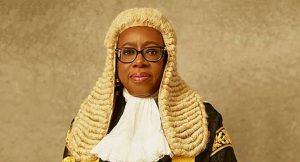 Today, Friday, August 23, 2024 marks a significant milestone in Nigeria’s judicial history with the swearing-in of Justice Kudirat Motonmori Olatokunbo Kekere-Ekun as the Chief Justice of Nigeria (CJN).
She is the second female CJN after Aloma Mariam Mukhtar from July 2012 to November 2014.
Kudirat Motonmori Olatokunbo Kekere-Ekun was born on May 7, 1958, in London, United Kingdom. She earned her Bachelor of Laws (LL.B) degree from the University of Lagos in 1980. After completing her studies at the Nigerian Law School, she was called to the Nigerian Bar on July 10, 1981. She later pursued further education at the London School of Economics, where she obtained a Master of Laws (LL.M) degree in November 1983.
She began her judicial career as a Senior Magistrate II in the Lagos State Judiciary, where she eventually advanced to the role of State High Court Judge. Between November 1996 and May 1999, she served as the Chairman of the Robbery and Firearms Tribunal, Zone II, in Ikeja. In 2004, she was elevated to the Nigerian Court of Appeal before her appointment as a Justice of the Supreme Court of Nigeria in July 2013.
In 2020, Justice Kekere-Ekun was part of the seven-member panel that annulled the election of Imo State Governor Emeka Ihedioha, declaring Hope Uzodinma of the All Progressives Congress (APC) as the rightful winner, despite him initially placing fourth in the election results.
As she steps into this role, she not only becomes the second female CJN in the nation’s history but also assumes a mantle of responsibility at a time when the Nigerian judiciary is under intense scrutiny.
The tasks before her are formidable, given the current state of the judicial system, and her success in this role will depend on her ability to address these challenges head-on.
Read also: Condemning the Organized Labour’s Threat of Nationwide Shutdown: An Abuse of Power
Ensuring Jurisdictional Integrity in Judicial Proceedings
One of the most pressing issues facing Justice Kekere-Ekun is the need to restore and maintain the integrity of jurisdictional boundaries within the judiciary. In recent years, the Nigerian legal landscape has been marred by instances where cases, particularly those related to elections, have been heard by courts outside the proper jurisdiction. This practice not only undermines the credibility of the judiciary but also sows confusion and erodes public confidence in the legal system.
Justice Kekere-Ekun must prioritize the enforcement of jurisdictional rules, ensuring that any matter brought before a court of competent jurisdiction remains within that court’s purview. This is especially crucial in election-related cases, where the stakes are high and the outcomes have far-reaching consequences. The CJN should issue clear directives that prohibit the transfer or reassignment of cases to courts that lack the appropriate jurisdiction, and she must hold judges accountable for adhering to these directives. By doing so, she can help to restore order and predictability to the judicial process, which is essential for upholding the rule of law.
Addressing the Problem of Conflicting Rulings
Another critical issue that Justice Kekere-Ekun must tackle is the problem of conflicting rulings from different courts. This has been a recurring problem in Nigeria’s judiciary, particularly in cases involving political disputes and elections. Conflicting rulings not only create confusion but also undermine the authority of the judiciary and its role as the final arbiter of disputes.
To address this, Justice Kekere-Ekun must implement measures to ensure that judges do not give rulings on cases that fall outside their jurisdiction or that they are not permitted to entertain. This will require a combination of stricter oversight, judicial education, and perhaps most importantly, the establishment of a more robust system of legal precedents that lower courts must follow. By promoting consistency in judicial decisions, she can help to rebuild trust in the judiciary and ensure that the law is applied fairly and uniformly across the country.
Combatting the Misuse of Perpetual Injunctions
One of the most egregious abuses within the Nigerian judiciary is the use of ‘perpetual injunctions’ by some judges to shield politically powerful individuals from prosecution, particularly in corruption cases. These injunctions, which effectively prevent any future legal action against the individuals in question, have been used as tools of political patronage and have allowed corrupt officials to evade justice with impunity.
Justice Kekere-Ekun must take a firm stand against this practice. She should issue a directive to all judges under her authority that no perpetual injunctions should be granted in corruption-related cases. Instead, such cases should be allowed to proceed through the normal legal process, with the courts fully examining the evidence and rendering judgments based on the merits of each case. By taking this stance, she can help to ensure that the judiciary is not seen as a protector of the corrupt, but rather as a defender of justice and accountability.
Expediting Election-Related Judgments
In a country like Nigeria, where elections are often hotly contested and fraught with irregularities, the timely resolution of election-related disputes is crucial for maintaining political stability. Unfortunately, the Nigerian judiciary has often been criticized for its slow pace in delivering judgments on election matters, leading to prolonged periods of uncertainty and, in some cases, the undermining of democratic processes.
As CJN, Justice Kekere-Ekun must prioritize the swift resolution of election-related cases. She should mandate that judges handling such cases deliver their judgments within a specified timeframe, without unnecessary delays. This will not only help to ensure that justice is served promptly but also prevent the courts from being used as tools for political manipulation. By expediting the judicial process in election matters, she can contribute to the strengthening of Nigeria’s democracy and the protection of the electoral process.
Upholding Judicial Independence and Integrity
Beyond these specific tasks, Justice Kekere-Ekun’s overarching responsibility will be to uphold the independence and integrity of the judiciary. This will involve resisting external pressures, whether from political actors or other powerful interests, that seek to influence judicial decisions. It will also require a commitment to transparency and accountability within the judiciary itself.
Justice Kekere-Ekun must lead by example, demonstrating through her actions that the judiciary is committed to upholding the rule of law and delivering justice impartially. She should also work to strengthen the mechanisms for judicial oversight, ensuring that judges who engage in misconduct or corruption are held accountable. By fostering a culture of integrity and accountability within the judiciary, she can help to restore public confidence in the legal system and reinforce the judiciary’s role as a pillar of democracy.
Conclusion
Justice Kudirat Motonmori Olatokunbo Kekere-Ekun’s appointment as the Chief Justice of Nigeria comes at a critical time for the country’s judiciary. The tasks before her are daunting, but they are also essential for the future of Nigeria’s legal system and its democratic institutions. By focusing on key issues such as jurisdictional integrity, conflicting rulings, the misuse of perpetual injunctions, and the timely resolution of election-related disputes, she has the opportunity to make a lasting impact on the judiciary and the nation as a whole.
As she takes on this role, the expectations are high, and the challenges are numerous. However, with her vast experience, commitment to justice, and determination to uphold the rule of law, Justice Kekere-Ekun is well-positioned to lead Nigeria’s judiciary into a new era of integrity, accountability, and fairness. The nation will be watching closely, and the legacy she builds will be a testament to her leadership and vision for the future of justice in Nigeria.


