

Tinubu’s Food Price Relief: Nigerians Still Grapple with Skyrocketing Costs One Month After Implementation
By Fasuyi Tolulope Samuel
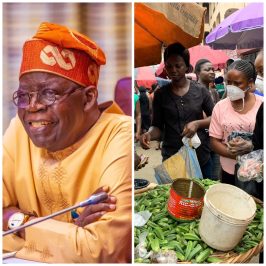 Despite the Nigerian government’s recent announcement of zero per cent import duty and Value-Added Tax (VAT) exemptions on basic food items, the reality for millions of citizens tells a different story.
The implementation of these policies, which was expected to provide immediate relief from soaring food prices, has proven ineffective, leaving Nigerians in dire straits. The measure, while well-publicized in the media, appears to have had no real impact on the ground. Prices continue to rise at alarming rates, pushing basic foodstuffs beyond the reach of ordinary Nigerians.
When President Bola Tinubu approved the reduction of import duties on essential food items like husked rice, millet, and maize, there was a sense of optimism. However, as we observe today, the cost of a small paint bucket of rice now hovers between ₦6,800 and ₦7,200, while a small tin of brown beans sells for about ₦2,000. The prices of other staples, such as wheat and maize, continue to spike, contradicting the government’s claims of price relief. The promised benefits of lower duties have not trickled down to the markets, leaving many families struggling to feed themselves.
The disconnect between the government’s announcements and the real-world impact can be traced back to several key issues. First, the removal of duties has not addressed the structural challenges plaguing Nigeria’s food system. Insecurity in food-producing regions, inadequate storage facilities, and the skyrocketing cost of fuel for transportation have rendered any tax exemptions virtually meaningless. Traders are still grappling with high operational costs, which continue to push food prices upward.
Read also: Editorial: Who Will Fix Nigeria – A Nation in Desperate Need of Visionary Leadership!
Moreover, the inflationary pressure on the Nigerian economy, which has seen food inflation surge to 40.66% year-on-year as of June 2024, exacerbates the issue. According to experts, this inflation is driven by a combination of poor agricultural output, dependence on food imports, and the rising cost of transportation. Even with the government’s well-meaning policies, these broader economic factors have drowned out any potential relief. The reduction in import duties is akin to treating a bullet wound with a band-aid—ineffective and insufficient given the magnitude of the problem.
Ordinary Nigerians, who are already reeling from the effects of fuel subsidy removal, are feeling the pinch even more. The increased cost of fuel has had a ripple effect on virtually every sector, further eroding the purchasing power of the average consumer. With transportation costs at an all-time high, the cost of moving food from rural farms to urban markets has doubled, if not tripled, compounding the crisis.
The government’s inaction on key structural reforms, particularly in the agricultural sector, speaks volumes. Local farmers are still struggling with inadequate access to fertilizers, seeds, and mechanized tools, and the promised support in these areas has yet to materialize. Additionally, insecurity in farming regions has limited the ability of farmers to produce food at scale, making Nigeria even more reliant on expensive imports.
What’s clear is that the current policy is nothing more than a temporary, cosmetic solution. While the government may have acted with good intentions, the lack of meaningful, long-term agricultural and economic reforms ensures that these price cuts will never reach the average Nigerian family.
It is time for the government to take real, decisive action that goes beyond tax exemptions. Nigeria needs a comprehensive food security strategy that tackles the root causes of inflation: poor agricultural practices, insecurity, and the rising cost of transportation. Without addressing these issues, any attempt to lower food prices will be in vain.
The masses are crying out for relief, and the government’s failure to act is not only disappointing but dangerous. With the country facing an unprecedented cost-of-living crisis, Nigerians deserve better than policies that exist only on paper. The government must act now—before it is too late.
Conclusion
Nigerians need immediate, tangible results, not empty promises. The government must recognize that its current measures are ineffective and take bold steps to bring real relief to the people. Without immediate intervention, food insecurity will worsen, and the ordinary citizen, already burdened by fuel price hikes and inflation, will be pushed deeper into poverty. Only a holistic approach—one that addresses agricultural reforms, security, and transportation—will offer lasting relief from this crisis.


