

When Protests Collide: The Great Nigerian Protest Paradox
By Fasuyi Tolulope Samuel
In Nigeria, where protests are as common as jollof rice at a party, it seems we’ve reached an unprecedented level of civil action—protesting against a protest.
Yes, you read that right. On August 1, as one group rallies for their cause, another faction purportedly siding the Federal Government has taken to the streets to stop the first group from protesting. It’s like a protest inception, a rally within a rally. But why, you ask, would anyone want to protest a protest?
Let’s dissect this paradox with a pinch of critical insight. First, imagine a world where protests are so abundant that we need a protest to prevent them. It’s almost like a bureaucratic mess where forms are filled out to request permission to fill out more forms. In the Nigerian context, this is not only plausible but delightfully absurd.
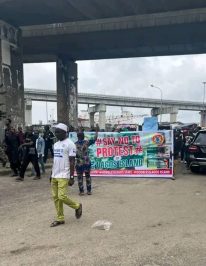
For many Nigerians, protesting has become a national sport—one where everyone is both player and referee. The upcoming August 1 protest has sparked a new breed of protester: those who feel that protesting about the protest is a more effective use of their time.
It’s like saying, “I know you’re upset about this issue, but I’m even more upset that you’re upset!” Talk about taking the high road.
Critics argue that this protest-against-a-protest phenomenon reveals a deeper societal issue: a disillusioned populace struggling with protest fatigue. After all, when you’ve protested against corruption, bad roads, inflation, and the weather (yes, some people have protested the weather), it’s easy to become jaded.
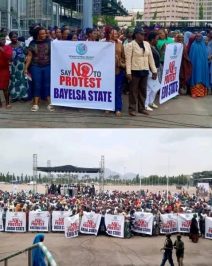
So, some Nigerians might see the August 1 protest as just another overhyped event in a long series of grievances or one that will eventually end the peanuts they are getting from their taskmasters. For them, protesting against it is an attempt to show they’re not just another face in the crowd but rather, a face tired of the crowd altogether or enjoying the protest which has been paid for.
On a more profound level, this double-layered protest is a testament to the diverse and often contradictory nature of Nigerian activism.
In a country where everyone has a cause, and everyone’s cause can be someone else’s problem, it’s no wonder that one protest can spark another. It’s a dance of dissent where the rhythm is unpredictable, and the choreography is anything but synchronized.
In essence, the protest against the August 1 protest is a manifestation of a uniquely Nigerian approach to civil activism. It’s both a critique and a continuation of the ongoing struggle, where even the act of opposing a protest becomes a form of protest itself.
So, as Nigerians prepare for this unusual showdown, one thing is certain: in the land of endless protests, the only thing more predictable than a protest is another protest about the protest.


