

Why Protesters Should Submit Their Names, Address To US – IGP Egbetokun
Afor Kenneth
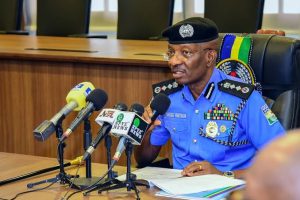
As a nationwide protest is set to commence on August 1, the police authorities are seeking information about the participants.
During a press briefing in Abuja on Friday, the Inspector General of Police, Kayode Egbetokun, urged all groups intending to join the demonstrations to provide their details to the respective state commissioners of police.
According to Egbetokun, this request is aimed at ensuring a peaceful protest, and the submitted information will facilitate adequate security arrangements. By obtaining the details of the demonstrators, the police aim to maintain public safety and prevent any potential disruptions during the protest.
Read also: Court Orders Remand Of Alleged Drug Baron, Temo
“We acknowledge the constitutional right of Nigerian citizens to peaceful assembly and protest,” the police boss said.
“However, in the interest of public safety and order, we urge all groups planning to protest to provide necessary details to the Commissioner of Police in the state where the protest is intended to take place.
“To facilitate a successful and incident-free protest, they should please provide the following information: state the proposed protest routes and assembly points; expected duration of the protest; and names and contact details of protest leaders and organisers.”
The police boss emphasized the need for protest organizers to provide critical information to ensure a peaceful and secure environment. This includes strategies to prevent criminal elements from infiltrating the demonstrations, as well as identifying potential troublemakers. Egbetokun expressed concerns about the risk of hijacking by criminal elements and highlighted the importance of intelligence gathering to prevent disruptions.
To guarantee public safety, the police require details on protest routes and locations to avoid conflicts with other events. Additionally, Egbetokun outlined guidelines for protesters, including establishing open communication channels with leaders, mitigating the risk of violence and property damage, and minimizing criminal activity. By following these guidelines, the police aim to maintain order and protect participants during the demonstrations.
“We encourage all protesters to cooperate with the police, obey the law, and adhere to global best practices for peaceful assembly to guarantee a safe and successful exercise of their rights.”
On Thursday, President Bola Tinubu weighed in on the planned nationwide protests, saying that sponsors of the demonstrations do not love the country.
Though he did not identify any sponsor, he said those championing the cause of the protests have alternative passports and hold meetings virtually across the world.
“The sponsors of protests do not love our country. They have no love for the nation. They do not understand citizenship. They have alternative passports,” Tinubu spoke at the Presidential Villa while receiving a delegation of Islamic leaders led by Sheikh Bala Lau.
“They are in different parts of the world holding meetings virtually. We do not want to turn Nigeria into Sudan. We are talking about hunger, not burials. We have to be careful. We should be careful with premature politics; politics of hate, and anger.
“The internet has made it possible to hold meetings in artificial settings. They hold meetings and sponsor anger,” the President was quoted as saying in a statement by his spokesman, Ajuri Ngelale.
President Tinubu cautioned that protests driven by emotions like anger and hate can escalate into violence, potentially hindering the country’s progress. His statement comes after security agencies, led by the Department of State Services (DSS), advised against planned demonstrations that could compromise national security.
In a statement released on Thursday, the DSS acknowledged citizens’ right to peaceful protest but expressed concerns that certain individuals planned to exploit the situation for their own purposes. The agency claimed to have identified the masterminds behind the potential hijacking, emphasizing the need for vigilance to prevent any untoward incidents.
“The plotters desire to use the intended violent outcome to smear the federal and sub-national governments; make them unpopular and pit them against the masses,” it said in a statement by its spokesman Peter Afunanya. “The long-term objective is to achieve a regime change, especially at the Centre.”
A growing online movement, tagged #EndBadGovernance, has been gaining traction in response to Nigeria’s worsening economic situation.
The recent removal of fuel subsidies and introduction of a floating exchange rate have led to a surge in living costs, with inflation soaring to 34% according to the National Bureau of Statistics. This has made basic necessities unaffordable for millions of Nigerians.
In a bid to avert the planned protests, President Tinubu has been engaging with various stakeholders, including traditional leaders, as part of a last-ditch effort to address the grievances. He is urging protest organizers to exercise patience and give his administration time to implement reforms, promising that these efforts will yield positive results in the long term.
The President’s appeals come as the country teeters on the brink of widespread demonstrations, sparked by frustration over the government’s handling of the economy.


